17 December, 2025

Category
technology-leads
Author
Kyrylo Kozak
Technology Leads Guide: Strategies for 2026 Success
In the fast-paced world of tech, technology leads are at the forefront, driving digital transformation and innovation. Each decision they make can shape an organization’s future and set the pace for industry change.
This guide is designed to empower technology leads with the strategies and insights they need to succeed in 2026. You’ll discover practical frameworks, cutting-edge tools, and leadership tactics tailored for the modern tech landscape.
Get ready to explore emerging trends, master essential skills, harness AI-driven processes, and unlock proven team management practices. Using the AIDA framework, we’ll help you future-proof your approach and lead with confidence.
The Evolving Role of Technology Leads in 2026
Technology leads are stepping into a new era, where their influence shapes not just code but entire business strategies. The landscape is shifting, and the expectations from technology leads are higher than ever before.

Defining the Modern Technology Lead
Today’s technology leads are expected to be visionaries, not just technical experts. Their responsibilities have grown to include shaping strategic direction and fostering cross-team collaboration. Instead of focusing solely on development tasks, technology leads now drive business alignment and ensure that technical decisions deliver real value.
At Fortune 500 companies, technology leads reportedly spend 60% of their time on strategic initiatives, according to Gartner in 2023. This shift illustrates how the role is evolving from code-centric to strategy-driven, positioning technology leads as crucial partners in organizational success.
Key Challenges Facing Tech Leads
Technology leads face a unique set of challenges as they navigate 2026. Managing remote and hybrid teams has become the norm, bringing new complexities in communication and collaboration. The pace of technological change is relentless, and technology leads must continually adapt to keep their teams ahead.
Balancing the drive for innovation with the need for robust security and regulatory compliance is another major hurdle. As technology leads juggle these demands, they must ensure that their teams remain agile, resilient, and equipped to tackle shifting priorities.
The Rise of Cross-Functional Leadership
Collaboration is at the heart of modern technology leads’ success. They work closely with product, marketing, and business units to break down silos and accelerate digital transformation. This cross-functional approach empowers technology leads to influence everything from customer experience to go-to-market strategies.
A standout example is found in leading SaaS firms, where technology leads are driving end-to-end transformation projects. By uniting diverse teams, technology leads enable faster innovation and more effective problem-solving, making them indispensable to the organization’s growth.
Metrics for Success in 2026
Success for technology leads is increasingly measured by business outcomes, not just technical delivery. Key performance indicators now include delivery velocity, team satisfaction, and overall business impact. According to Forrester in 2023, 72% of organizations directly tie technology lead performance to their influence on business results.
| KPI | Why It Matters | How Tech Leads Use It |
|---|---|---|
| Delivery Velocity | Measures speed to market | Optimize workflows |
| Team Satisfaction | Drives retention | Enhance culture |
| Business Impact | Connects to company goals | Aligns tech and strategy |
For practical tips on leveraging analytics and KPIs, check out Analytics and reporting for tech leads to measure what truly matters.
Essential Mindset Shifts
To thrive, technology leads must embrace a growth mindset and cultivate adaptability. The most successful technology leads are those who prioritize continuous learning, encourage experimentation, and stay open to new ideas. This shift transforms challenges into opportunities and fosters a culture of innovation.
By investing in their own development and that of their teams, technology leads set the tone for resilience and long-term success. Adaptability and curiosity are no longer optional—they are essential traits for every technology lead.
Emerging Technology Trends Impacting Lead Strategies
Staying ahead of the curve is essential for technology leads as 2026 approaches. The digital landscape is shifting, and those who recognize and adapt to new trends will position their teams for success. According to Gartner's Top Strategic Technology Trends for 2026, understanding these shifts is now a core part of the technology leads' playbook.

Artificial Intelligence and Automation
Artificial intelligence is revolutionizing how technology leads approach project delivery. Integrating AI into development cycles enables predictive analytics, smarter resource allocation, and automated testing. For example, 80% of enterprises are projected to automate core workflows by 2026, freeing up teams for higher-value tasks.
Technology leads leveraging AI can anticipate potential bottlenecks, reduce manual labor, and accelerate release cycles. This creates a competitive edge, allowing teams to focus on innovation rather than repetitive work. Embracing AI-driven tools is not just a technical upgrade, it's a strategic necessity for technology leads aiming for operational excellence.
Cloud-Native and Edge Computing
Cloud-native architectures and edge computing are reshaping how technology leads build and scale applications. Adopting microservices and serverless models provides flexibility and rapid deployment, essential for responding to market changes.
A real-world example is Netflix, which uses edge infrastructure to deliver content seamlessly to millions of users worldwide. For technology leads, embracing these approaches means greater resilience, cost efficiency, and global reach. Edge computing, in particular, empowers teams to process data closer to the source, reducing latency and improving user experience.
Cybersecurity as a Core Priority
Cybersecurity is no longer an afterthought for technology leads. With 65% of breaches in 2023 exploiting application layer vulnerabilities, proactive security must be embedded from the earliest stages of development.
Leading technology leads prioritize secure coding practices, regular vulnerability assessments, and cross-team security training. Building a culture of security awareness ensures that both innovation and compliance move hand in hand. For technology leads, this mindset helps prevent costly incidents and builds trust with stakeholders.
Low-Code/No-Code Platforms
Low-code and no-code platforms are transforming how technology leads enable their teams. By empowering non-developers to contribute to app creation, delivery speeds up and bottlenecks are minimized. By 2026, half of all new enterprise applications will use these platforms.
Technology leads adopting low-code tools can quickly prototype solutions, iterate based on feedback, and respond to business needs with agility. This democratization of development fosters a culture of innovation and reduces dependency on scarce engineering resources.
Data-Driven Decision Making
Data-driven strategies are critical for technology leads striving for continuous improvement. Leveraging analytics and real-time dashboards allows leaders to monitor KPIs, optimize resource allocation, and make informed choices.
For instance, technology leads using business intelligence tools can identify underutilized assets, track project progress, and proactively address risks. This approach not only enhances transparency but also supports a culture of accountability and measurable impact.
Critical Skills and Competencies for Future-Ready Tech Leads
Staying ahead in tech means more than just mastering code. In 2026, the skills required of technology leads are evolving rapidly. It's not only about technical prowess, but also about leadership, strategic thinking, and emotional intelligence. Let’s explore the five core competencies every technology lead must develop to thrive in this dynamic landscape.

Technical Mastery and Continuous Upskilling
Technology leads must remain at the cutting edge of new programming languages, frameworks, and software architectures. This means setting aside time each month for learning, whether through online courses, workshops, or peer-led sessions. According to a recent Stack Overflow Survey, 70% of technology leads prioritize monthly upskilling.
A winning approach combines traditional learning with smart automation. For instance, leveraging AI tools for agency leads can streamline workflows, freeing up hours for innovation and skill development. Embracing these tools is crucial for technology leads who want to stay agile and competitive.
Try mapping your learning goals to upcoming project needs. This ensures your new skills have immediate, real-world impact.
Leadership and Communication Excellence
Leadership for technology leads now means guiding distributed teams across time zones and cultures. Clear, empathetic communication is a must. Using active listening and transparent goal setting builds trust and keeps everyone aligned.
Consider these strategies:
- Host regular one-on-ones for open feedback.
- Set clear, measurable objectives.
- Foster a culture of psychological safety.
Great technology leads also know when to delegate and how to recognize team achievements. These soft skills turn average teams into high-performing ones.
Business Acumen and Strategic Thinking
Modern technology leads bridge the gap between technical execution and business strategy. Translating company goals into actionable technical roadmaps is essential. Collaborating closely with the C-suite ensures projects align with broader organizational objectives.
To sharpen business acumen, technology leads can:
- Attend cross-departmental meetings
- Analyze key business KPIs
- Participate in strategy sessions
A strong grasp of business priorities empowers technology leads to make smarter technical decisions, driving both innovation and value.
Change Management and Agility
Change is constant, and technology leads must guide their teams through it. Adopting frameworks like Agile, DevOps, or Lean helps manage transitions smoothly and keeps projects on track. Technology leads who embrace change foster resilience and adaptability.
Key practices include:
- Regular retrospectives to identify improvement areas
- Incremental delivery for quick feedback loops
- Open communication during periods of transformation
By modeling agility, technology leads inspire teams to embrace new challenges and pivot when necessary.
Emotional Intelligence and Team Empowerment
High emotional intelligence is a game changer for technology leads. It enables them to resolve conflicts, motivate individuals, and build a culture of trust. Teams led by high-EQ leaders consistently outperform their peers.
Ways to empower your team:
- Encourage idea sharing and experimentation
- Recognize individual strengths
- Provide mentorship and support
Technology leads who invest in emotional intelligence not only boost team morale but also drive innovation and long-term success.
AI-Driven Tools and Automation for Lead Efficiency
Artificial intelligence is transforming how technology leads approach efficiency, productivity, and team management. The right AI-driven tools can streamline every stage of the development lifecycle, from project planning to performance tracking.
AI for Project Management and Workflow Automation
For technology leads, AI-powered project management systems are game changers. These platforms automate scheduling, task prioritization, and resource allocation, freeing up valuable time for strategic work. Imagine a tool that predicts bottlenecks before they occur or automatically assigns tasks based on team strengths.
Many organizations now leverage AI to optimize sprints and minimize project overruns. According to McKinsey, teams using AI project management tools have seen a 60% reduction in missed deadlines. For a deeper dive into how AI is reshaping workflows, check out AI-Powered Automation and Next-Generation Workflows.
By integrating these solutions, technology leads can focus more on innovation and business outcomes, not just task tracking.
Intelligent Code Review and Quality Assurance
Quality assurance is no longer just about manual checks. AI-driven code review platforms are helping technology leads catch errors earlier and release features faster. These tools use machine learning to analyze code, flag vulnerabilities, and even suggest improvements.
In top fintech companies, adopting automated code review has led to fewer bugs and smoother launches. Technology leads benefit from real-time feedback and actionable insights, enabling teams to maintain high standards without slowing development.
With AI, code quality becomes a proactive process, giving technology leads more confidence in every release.
Smart Collaboration and Communication Platforms
Remote and hybrid work are here to stay, and technology leads need smarter ways to connect their teams. AI-powered collaboration tools are now essential—think chatbots that answer technical questions, meeting assistants that summarize discussions, and integrations that keep everyone aligned.
These platforms boost productivity by automating routine communications and organizing project knowledge. Forbes reports that teams using AI-driven collaboration solutions have increased their productivity by 40%. For technology leads, this means more time spent on high-value work and less on repetitive admin.
Embracing these tools helps technology leads keep distributed teams engaged, informed, and efficient.
Data-Driven Talent Management
Technology leads are also using AI to build stronger, more diverse teams. Advanced talent management platforms analyze skill gaps, recommend targeted training, and even help with unbiased hiring decisions. These systems provide real-time data on team performance, making it easier to recognize achievements and address challenges.
With AI, technology leads can personalize career development plans and ensure that every team member is growing. The result is a high-performing, motivated workforce ready to tackle future challenges.
Adopting data-driven talent management tools empowers technology leads to lead with insight, not just intuition.
Strategic Decision-Making Through Intelligent Automation
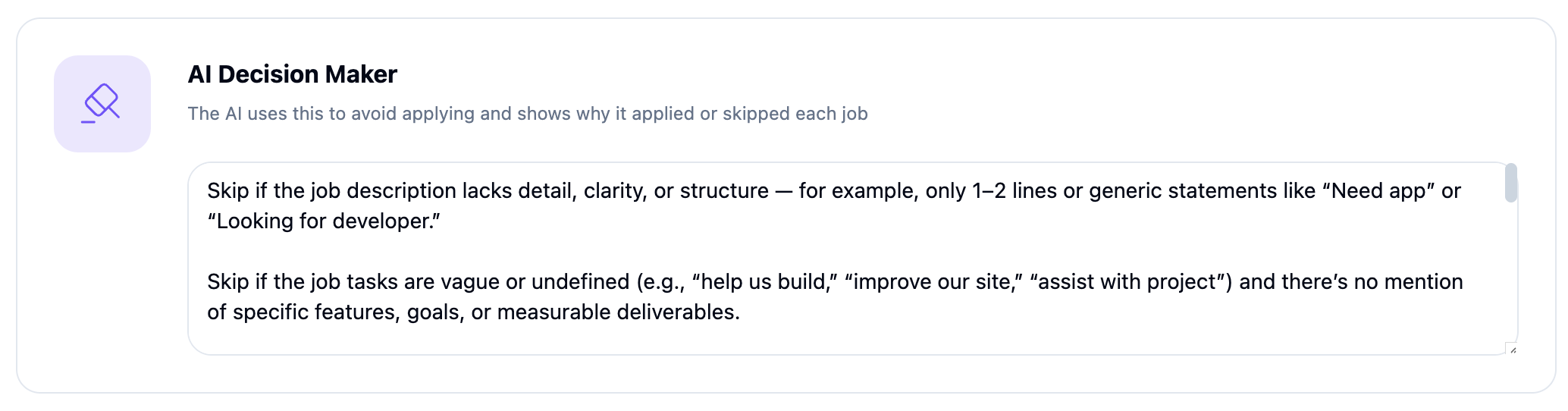
For technology leads managing agency operations, Getmany exemplifies how AI can transform decision-making from reactive to strategic. Technology leads provide custom business instructions once, and the AI Decision Maker applies this logic to every opportunity that appears.
Intelligent Analysis Based on Your Criteria
The AI analyzes comprehensive job data - title, description, budget, duration, category, client metrics like feedback scores and total spending, hiring history, and geographic location - then applies the leader’s predefined instructions to determine whether each opportunity aligns with their business strategy.
Leadership Time Liberation
Rather than manually evaluating each potential project against their criteria, technology leads can encode their decision-making logic into the system. The AI consistently applies this strategic framework across thousands of opportunities, ensuring only those that match the leader’s specifications reach the team’s pipeline.The result is a 30-hour weekly time savings that allows technology leaders to shift from operational filtering to strategic planning and team development - exactly the evolution the role demands in 2026.
Let's show you how it works for your agency.
Building and Managing High-Performance Tech Teams
Building and managing high-performance tech teams is a top priority for technology leads. The ability to attract, engage, and retain exceptional talent sets the stage for innovation and long-term success. In this section, we’ll break down proven strategies and actionable tips that empower technology leads to nurture thriving teams in a fast-changing environment.
Recruitment and Onboarding Best Practices
Recruiting top talent is no longer just about technical skills. Technology leads now look for adaptability, cultural fit, and growth potential. Using data-driven hiring methods helps eliminate bias and ensures diverse perspectives.
- Leverage AI-powered tools for screening and assessment.
- Tap into wider talent pools through global sourcing.
- Create structured onboarding with mentorship and clear milestones.
A smooth onboarding experience allows new hires to contribute quickly. Technology leads who prioritize personalized onboarding and feedback sessions see higher retention rates and stronger team cohesion.
Fostering a Culture of Innovation and Inclusion
Innovation flourishes where diverse voices are heard and experimentation is encouraged. Technology leads play a critical role in shaping a psychologically safe environment.
- Encourage open dialogue and continuous idea sharing.
- Recognize and celebrate creative problem-solving.
- Provide resources for professional growth and learning.
Data shows that inclusive teams outperform their peers by 35 percent. By promoting diversity and fostering a sense of belonging, technology leads unlock team potential and drive breakthrough results.
Remote and Hybrid Team Management
The shift to remote and hybrid work is now a permanent fixture. Technology leads must master asynchronous communication, leverage collaboration platforms, and track performance effectively.
Using project management systems for tech teams allows for streamlined workflows and better visibility across distributed teams. Regular check-ins, virtual team-building activities, and clear documentation further strengthen team bonds.
By embracing digital tools and flexible policies, technology leads ensure productivity and engagement, no matter where team members are located.
Upskilling and Retention Strategies
Continuous learning is essential for both team and organizational growth. Technology leads who invest in upskilling see higher job satisfaction and lower turnover.
- Launch learning and development programs tailored to team needs.
- Set up mentorship initiatives connecting junior and senior members.
- Offer clear career advancement paths and recognition for achievements.
Companies with robust upskilling strategies retain 94 percent of top talent. When technology leads champion personal and professional growth, they create an environment where team members want to stay and excel.
Measuring and Optimizing Team Performance
Tracking team performance requires more than just delivery metrics. Technology leads use a blend of quantitative and qualitative KPIs to paint a complete picture.
Key metrics include:
| KPI | Purpose |
|---|---|
| Velocity | Measures delivery speed |
| Code Quality | Assesses maintainability |
| Satisfaction | Gauges team engagement |
| Innovation | Tracks new ideas and solutions |
By implementing real-time dashboards and regular feedback loops, technology leads can quickly identify what’s working and where improvements are needed. This data-driven approach ensures ongoing excellence and adaptability.
Future-Proofing Your Technology Lead Strategy
The future is unpredictable, but one thing is certain: technology leads who actively future-proof their strategies will not just survive, they will thrive. As the digital landscape shifts, adaptability and vision become critical assets. Let’s break down the core pillars that will empower technology leads to stay ahead in 2026 and beyond.
Embracing Continuous Learning and Adaptability
Continuous learning is the heartbeat of successful technology leads. The rapid pace of tech evolution means yesterday’s expertise can quickly become obsolete. Leaders who embrace microlearning, nano-degree programs, and real-time knowledge sharing are far more likely to navigate the tides of change confidently.
Many technology leads set aside dedicated hours each week for upskilling, whether it’s through online courses or peer-led workshops. This habit not only sharpens technical skills but also fosters a culture of curiosity within teams. Imagine a team where everyone is encouraged to experiment and share lessons learned—this spirit drives innovation and resilience.
Building a growth mindset is not just about personal development. It’s about modeling adaptability for your entire organization, inspiring others to see change as an opportunity rather than a threat.
Scenario Planning and Risk Management
Anticipating disruption is a core responsibility for technology leads. From cyber threats to supply chain shocks, the risks are real and ever-changing. Proactive scenario planning equips leaders to respond swiftly and minimize impact.
Start by identifying your top risks: cybersecurity, compliance, talent shortages, and even global events. Technology leads often work with cross-functional teams to simulate possible disruptions and define contingency plans. For example, regular tabletop exercises can reveal hidden vulnerabilities and keep everyone prepared.
Data shows that 48% of tech leaders now prioritize risk management as a top strategic goal. Incorporating risk dashboards and regular reviews helps keep potential issues visible and actionable. This approach transforms uncertainty into a manageable, strategic advantage.
Building Scalable and Flexible Architectures
Scalability is non-negotiable for future-ready technology leads. As user demands surge and business models evolve, rigid systems can become roadblocks. Embracing modular, API-first, and cloud-native designs gives teams the agility to pivot and scale without friction.
Consider how leading organizations leverage composable architectures to launch new features rapidly. Technology leads are increasingly turning to microservices and serverless solutions, which enable seamless integration and faster deployments. For a deeper dive, check out Building a scalable tech stack, which explores strategies for creating adaptable technology foundations.
A flexible architecture empowers technology leads to innovate boldly, knowing their platforms can support growth and change. The result? Faster time-to-market and a sustainable competitive edge.
Cultivating Ecosystem Partnerships
No technology lead operates in a vacuum. The most successful leaders build strong partnerships with startups, vendors, and open-source communities. These relationships open doors to new ideas, cutting-edge tools, and collaborative innovation.
Technology leads who invest in ecosystem partnerships often unlock 60% more innovation, as reported by Accenture. This could mean co-developing solutions with strategic partners or contributing to key open-source projects. Creating a network of trusted collaborators accelerates learning and helps teams stay on the front edge of industry trends.
Ask yourself: How often do you tap into external expertise? Proactive outreach, joint ventures, and community involvement are all powerful ways to future-proof your leadership strategy.
Setting a Vision for 2030 and Beyond
The best technology leads look far beyond the next quarter—they set bold, inspiring visions for the years ahead. This means crafting long-term roadmaps that prioritize sustainability, ethical innovation, and responsible AI adoption.
Leaders are now integrating green IT practices and championing transparent, fair use of emerging technologies. Some are leveraging AI Supercomputing Platforms Driving Innovation to tackle complex workloads and drive breakthrough advancements.
Setting a vision for 2030 also means building flexibility into your strategy. Regularly revisiting goals and aligning them with both business objectives and societal values ensures that technology leads remain relevant and impactful in a changing world.
We’ve explored how technology leads are not just coding champions, but true architects of strategy, innovation, and team success. Imagine freeing up 30 hours a week to focus on big-picture leadership, while AI handles the repetitive proposal grind. That’s exactly what Getmany makes possible—trusted by hundreds of agencies, it’s the shortcut to more impact and less busywork. If you’re ready to future-proof your leadership and see what next-level productivity looks like, why not see Getmany in action? Your 2026 self will thank you!