11 February, 2026

Category
upwork-automation-tools
Author
Kyrylo Kozak
Upwork Automation Tools vs Manual Work in 2026
In 2026, Upwork is undergoing a transformation, driven by new technologies and changing freelancer strategies. Agencies and solo professionals alike are witnessing rapid shifts in how opportunities are discovered, proposals are sent, and client relationships are managed.
This article explores the debate between upwork automation tools and traditional manual freelancing. We will look at the latest automation advancements, compare them with hands-on approaches, and examine real-world results.
Whether you are seeking efficiency or aiming for deeper client connections, our guide will help you understand the pros and cons, share inspiring examples, and offer practical advice for thriving in the evolving Upwork landscape.
The Rise of Upwork Automation Tools in 2026
The landscape of Upwork automation tools in 2026 is dramatically different from just a few years ago. Agencies and freelancers are witnessing a rapid transformation, as AI-driven platforms reshape how work is sourced and secured. These tools are now at the core of competitive Upwork strategies, offering efficiency, speed, and new levels of integration that were once unimaginable.
Evolution of Upwork Automation: 2023–2026
From 2023 to 2026, upwork automation tools have undergone a remarkable evolution. What started as basic proposal bots has advanced to sophisticated, context-aware platforms powered by AI. The integration with CRMs and communication tools marked a turning point, as agencies sought seamless workflows and better data management.
Key milestones include:
- AI sophistication enabling human-like proposal writing
- Real-time job discovery and smart filtering
- Integration with Slack, Notion, WhatsApp, and popular CRMs
By 2025, more than 800 agencies were reportedly using top upwork automation tools, reflecting a strong market shift. Regulatory changes have also shaped this journey, as Upwork updated its stance on automation and implemented stricter anti-spam measures. These developments encouraged a move toward multi-platform automation, spanning Upwork, Fiverr, and Freelancer.com.
A notable case is GigRadar, which automated proposals with impressive, human-quality messaging. The result was faster job discovery, improved targeting, and a significant boost in proposal speed. For a comprehensive overview of this rapid transformation, see the Upwork automation guide for 2025.
Core Features of Leading Upwork Automation Tools
The most advanced upwork automation tools in 2026 offer a suite of features designed for productivity and compliance. AI-powered job search and filtering, such as “Vibe Scan,” allow users to zero in on relevant opportunities in seconds. Automated and highly personalized proposal generation ensures that outreach feels unique and tailored to each client.
Leading features include:
- Smart connect management and automated replenishment
- Real-time analytics and performance dashboards
- Multi-profile and multi-platform support for scaling teams
- Seamless integrations with Slack, Notion, WhatsApp, and CRMs
Security is also a top priority. Modern upwork automation tools employ sophisticated anti-detection mechanisms, reducing the risk of account bans. These tools enable agencies to maintain a consistent, data-driven approach, optimizing performance while staying compliant with evolving platform policies.
Automation in Practice: A Case Study
To understand how upwork automation tools perform in real-world scenarios, consider the example of GetMany, a platform used by over 300 agencies since 2023.
GetMany demonstrates the core capabilities that define advanced automation:
- Smart job filtering that eliminates up to 80% of irrelevant postings
- AI-powered proposal generation maintaining 8-30% reply rates
- 24/7 automated bidding with average response times under 10 minutes
- Integration with CRMs and workflow tools for unified operations
Agencies using this level of automation report saving 30+ hours weekly on routine tasks, allowing teams to focus on client relationships and strategic growth. Reply rates of 8-30% and proposal view rates above 35% demonstrate that automated outreach can compete with manual personalization when properly implemented.
However, these results require careful setup, ongoing optimization, and compliance with platform policies. GetMany's approach - combining automation for scale with strategic human oversight - reflects the hybrid model many successful agencies are adopting in 2026.
Weighing automation vs manual?
See how 300+ agencies balance efficiency
and personalization with AI-powered Upwork automation.
Manual Freelancing on Upwork: The Human Touch
In a world increasingly shaped by upwork automation tools, manual freelancing on Upwork remains a powerful approach for those who value deep client connections and hands-on project management. While automation is on the rise, many freelancers continue to thrive by relying on their personal skills, adaptability, and intuition. Manual freelancing is more than a workflow, it’s a philosophy centered on authenticity and bespoke service.

What Manual Freelancing Involves
Manual freelancing on Upwork is defined by a commitment to hands-on engagement at every step. Freelancers personally search for jobs, carefully reading postings to identify projects that align with their expertise and values. Instead of relying on upwork automation tools to scan listings, they invest time in understanding the nuances of each opportunity.
Proposal writing is another area where manual freelancers shine. Every proposal is custom-crafted to address the client’s unique needs, project goals, and pain points. This level of personalization often involves referencing specific details from the job post or the client’s previous projects, signaling genuine interest and effort.
Direct communication is at the heart of manual freelancing. Freelancers proactively reach out, answer questions, and nurture relationships from the first message to project completion. They manually manage connects and bidding strategies, choosing when and how to invest in opportunities. This approach allows for dynamic pivots, such as refining a pitch based on client feedback or shifting focus to higher-value projects. By foregoing upwork automation tools in favor of personal touch, freelancers can stand out among a sea of automated, generic responses. For instance, a designer might tailor a proposal with a quick mockup or a writer may suggest a unique content angle, making their bid truly memorable.
Advantages of Manual Freelancing
One of the standout advantages of manual freelancing is the ability to build deep, authentic relationships with clients. By taking the time to understand individual client needs and goals, freelancers can foster trust and loyalty that automated processes often lack. This human-centric approach also means freelancers have full control over the tone, style, and targeting of every proposal, ensuring each communication is genuine and well-crafted.
Flexibility is another major benefit. Manual freelancers can instantly adapt their strategies in response to client feedback or changing requirements. This level of agility is difficult to achieve with upwork automation tools, which often follow predefined templates or rules. When projects require creativity or a personalized touch, manual freelancers excel, especially in fields like design, consulting, or content creation.
The risk of account issues or bans is significantly lower, as manual approaches align with Upwork’s guidelines. Notably, the Upwork's November 2025 Hiring Report highlights the growing demand for human-centric skills, even as automation adoption rises. Real-world examples abound: freelancers win premium gigs by going the extra mile, such as crafting a proposal that includes a customized video introduction or a tailored portfolio sample. For those seeking to differentiate themselves, manual freelancing offers a clear path to premium clients and long-term success.
Limitations and Challenges
Despite its strengths, manual freelancing on Upwork comes with notable challenges. The most significant is time investment. Crafting personalized proposals, managing connects, and following up with clients can consume several hours each day. In contrast, upwork automation tools can handle repetitive tasks quickly, submitting dozens of applications in the time it takes a manual freelancer to send just a few.
Reach is another limitation. Manual freelancers are typically limited to 5 to 15 bids per day, whereas automation users may reach 30 to 50 potential clients. This reduced volume can make it harder to compete in fast-paced categories where jobs are filled quickly. Tracking analytics and optimizing performance is also more difficult without automation, making it challenging to learn from past efforts and improve outcomes.
Repetitive administrative tasks can lead to fatigue and burnout, especially during busy periods. There is always the risk of missing out on high-quality jobs simply because a proposal could not be sent fast enough. While upwork automation tools offer scale and speed, manual freelancers must navigate these hurdles to maintain their competitive edge. Ultimately, the choice between manual and automated approaches depends on each freelancer’s priorities, workflow, and the type of clients they wish to serve.
Upwork Automation Tools: Benefits, Risks, and Real-World Impact
Upwork automation tools have rapidly changed how agencies and freelancers approach online work. In 2026, these platforms offer advanced features that streamline repetitive tasks and help professionals scale their efforts. With competition on Upwork intensifying, understanding the benefits, risks, and real-world results of upwork automation tools is essential for anyone seeking a competitive edge.
Key Benefits of Automation Tools
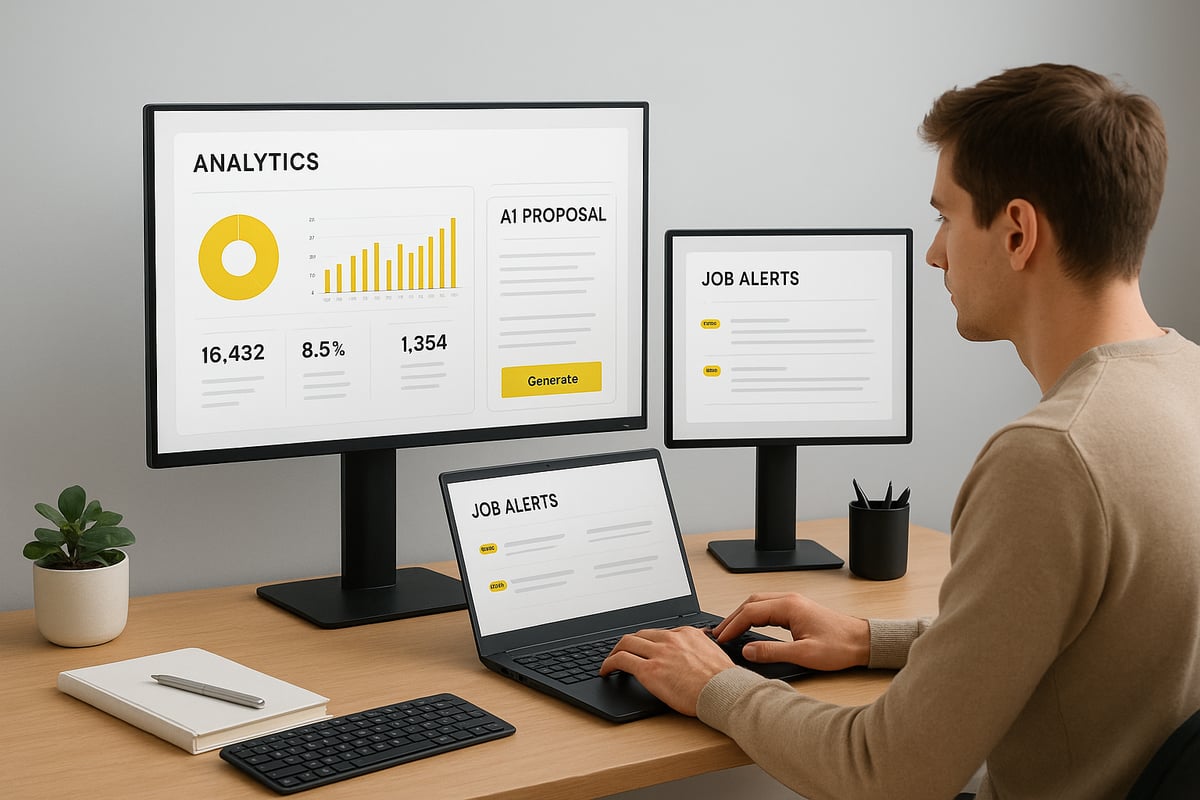
Upwork automation tools bring significant advantages to agencies and high-volume freelancers. One of the primary benefits is speed. These tools can submit proposals within 10 to 15 minutes of a new job posting, ensuring you never miss out on fast-moving opportunities. Automation also enables users to send 30 to 50 quality bids daily, which is two to ten times more than most manual efforts.
Other key benefits include:
- Consistency: Upwork automation tools guarantee proposals are sent, even outside normal working hours. This means you can target clients across different time zones without sacrificing sleep or personal time.
- Smart job filtering: Advanced algorithms eliminate up to 80% of irrelevant jobs, helping you focus only on the best-fit opportunities.
- Data-driven optimization: Built-in analytics let you track which proposals perform best, so you can refine your strategy over time.
- Resource savings: Automation reduces manual workload, freeing up 30 or more hours each week for agencies.
With these capabilities, upwork automation tools make it easier to scale your business, reach more clients, and optimize every step of your workflow.
Risks and Drawbacks of Automation
Despite their benefits, upwork automation tools are not without risks. The most pressing concern is compliance with Upwork's policies. If automation tools are detected, freelancers may face account warnings or even permanent bans. Some poorly designed tools generate generic or robotic proposals, which can harm your reputation and lower your chances of winning jobs.
Key risks include:
- Quality concerns: Not all upwork automation tools produce high-quality, personalized messages, making it harder to stand out.
- Over-reliance: Relying too much on automation may weaken personal client relationships, which are vital for long-term success.
- Evolving detection: Upwork continuously updates its detection algorithms, so even previously safe tools could become risky.
- Account security: Using unauthorized tools can put your account at risk.
To understand the current rules and avoid costly mistakes, review Upwork's Policy on Automation Tools. Staying informed can help you balance automation with compliance and protect your business.
Case Studies and User Outcomes
The impact of upwork automation tools is best seen in real-world scenarios. Agencies using platforms like GigRadar and Getmany consistently report improved results and greater efficiency.
Here is a summary of key outcomes:
Platform | Replies Increase | Application Speed | Account Issues | Time Saved |
|---|---|---|---|---|
GigRadar | +25% | 40% faster | None reported | N/A |
Getmany | +8-30% | ~10 min response | None reported | 30+ hrs/week |
Agencies leveraging upwork automation tools often reclaim more than 30 hours each week, allowing them to focus on higher-value activities. Many report a significant rise in revenue and improved work-life balance.
However, cautionary tales exist. Freelancers using cheap or poorly built tools have lost accounts and missed earnings. Meanwhile, some manual freelancers retain premium clients through highly customized proposals, showing that both strategies have merit.
The real-world impact of upwork automation tools depends on choosing the right solution, understanding the risks, and aligning automation with your business goals.
Comparing Upwork Automation Tools vs. Manual Freelancing: A Balanced Analysis
Choosing between upwork automation tools and manual freelancing is a pivotal decision for agencies and solo professionals in 2026. Both approaches offer distinct advantages, and the best path often depends on project goals, client expectations, and the scale of operations.
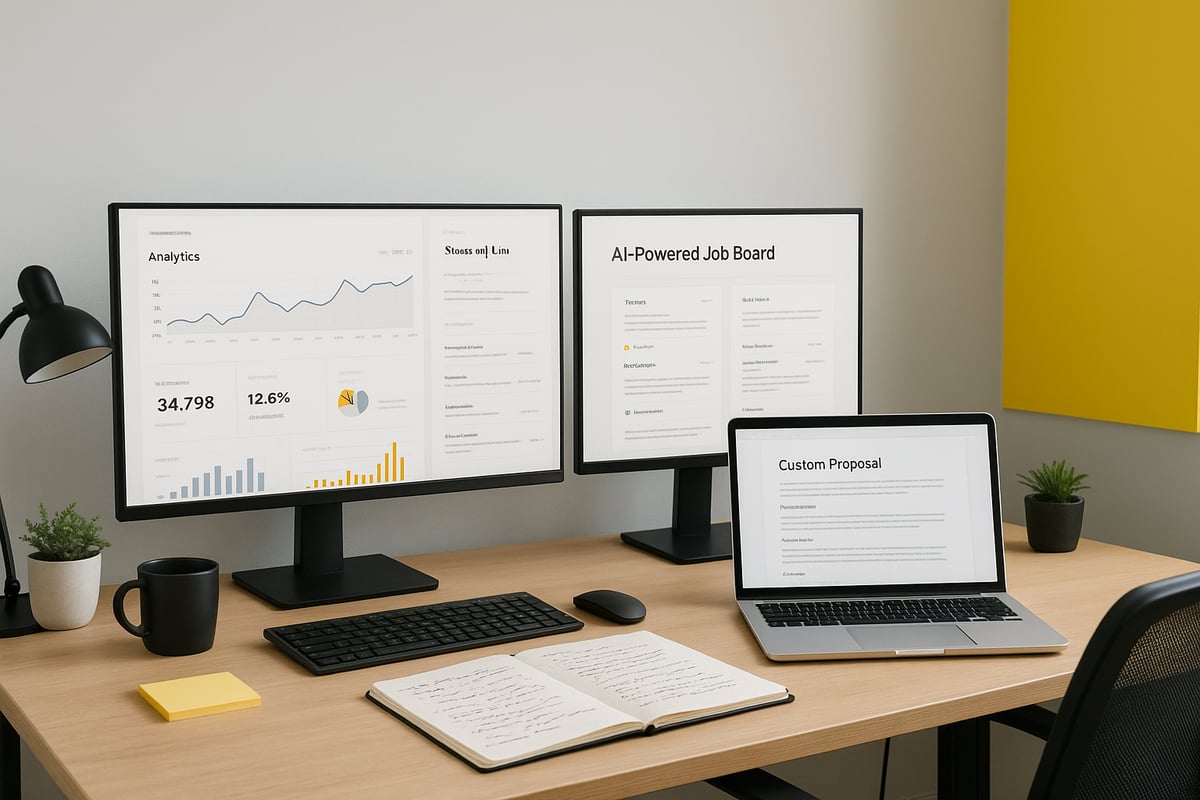
Below is a quick comparison to set the stage for deeper analysis:
Feature | Upwork Automation Tools | Manual Freelancing |
|---|---|---|
Proposal Volume | High (30–50/day) | Low (5–15/day) |
Personalization | Advanced AI, some limits | Fully custom |
Cost | Subscription-based | Time investment |
Risk of Policy Issues | Moderate (if detected) | Minimal |
Best For | Agencies, high-volume freelancers | Niche, creative professionals |
Efficiency and Scale
Upwork automation tools deliver unmatched efficiency, enabling agencies to submit dozens of proposals daily, even across time zones. These platforms operate around the clock, ensuring no opportunity is missed due to human limitations or fatigue. Manual freelancing, while more deliberate, caps daily outreach due to the time required for each application.
For agencies aiming to expand rapidly, automation tools can be transformative. They process job listings, filter opportunities, and submit tailored proposals at a scale manual methods cannot match. According to recent industry reports, users of upwork automation tools consistently achieve 2–10 times the daily application volume of manual freelancers. For those seeking a detailed comparison of leading solutions, see Top Upwork automation tool picks.
Proposal Quality and Personalization
Modern upwork automation tools leverage advanced AI to craft proposals that mirror human tone and context. Top platforms analyze job descriptions and client history, generating messages that feel personalized. However, some nuances and creative flourishes can elude even the best algorithms.
Manual freelancing excels in this area. Freelancers can infuse each proposal with unique insights, creative strategies, and a voice that resonates with specific clients. While AI-generated proposals are closing the gap, many premium clients still value the unmistakable human touch. Insights from Upwork's AI-Human Work Dynamic Report highlight how emotional connection and nuanced communication remain vital for high-value projects.
Cost and ROI
Upwork automation tools require an upfront or recurring subscription fee, but they often pay for themselves through increased proposal volume and higher win rates. Automation minimizes the opportunity cost of missed jobs and optimizes connect usage, which can significantly boost ROI for agencies.
Manual freelancing, in contrast, incurs no software costs. However, the time investment is substantial, and the limited number of daily proposals may result in missed revenue opportunities. Agencies using automation frequently report ROI multiples of 40 or more, while manual freelancers must weigh time against potential earnings.
Risk Management and Upwork Policy Compliance
One of the primary concerns with upwork automation tools is the risk of detection by Upwork’s evolving anti-spam algorithms. Even the most sophisticated tools must constantly adapt to avoid account warnings or bans. Leading automation platforms invest heavily in security and anti-detection measures, but some risk remains.
Manual freelancing carries minimal risk of policy violations. Every interaction is authentic, and freelancers can respond to feedback or platform changes immediately. However, this approach can be slower, potentially missing out on fast-moving opportunities.
Client Relationships and Communication
Automation tools can handle initial outreach efficiently, ensuring a broad net is cast. However, ongoing communication and relationship-building often benefit from a manual approach. Clients seeking complex or creative solutions tend to appreciate direct, thoughtful engagement.
Manual freelancing shines when building trust and rapport. Personalized follow-ups and tailored onboarding experiences create lasting client relationships. Many agencies now blend both approaches, using upwork automation tools for outreach and switching to manual communication for negotiation and project management.
Suitability for Different Freelancers and Agencies
Upwork automation tools are ideal for agencies and high-volume freelancers aiming for rapid growth. They excel in scenarios where speed and scale are crucial, such as competitive segments or repetitive project types.
Manual freelancing is better suited for niche experts, creative professionals, or those seeking premium clients. The ability to deeply customize every interaction can be the deciding factor in winning specialized projects. Some successful agencies adopt a hybrid strategy, automating the initial process and personalizing the rest.
Real-World Scenarios and Decision Matrix
When should you choose automation, manual, or a blend? Use the following matrix as a guide:
- High competition or repetitive jobs: upwork automation tools win on scale and speed.
- Specialized, creative, or relationship-driven projects: manual freelancing excels.
- Large agencies: benefit most from automation's efficiency.
- Solo experts: thrive with manual, high-touch methods.
Ultimately, the best choice depends on your goals, workload, risk tolerance, and client base. Evaluating both approaches and periodically reviewing your strategy ensures you stay competitive in Upwork’s evolving landscape.
The Future of Freelancing on Upwork: Trends and Predictions for 2026
The landscape of Upwork freelancing is evolving rapidly as we look toward 2026. Both agencies and independent professionals are adapting to new tools, shifting policies, and changing client expectations. Understanding the future of upwork automation tools is essential for anyone seeking long-term success on the platform.
Technology Advancements and AI Evolution
By 2026, upwork automation tools are expected to reach new heights in sophistication. AI-driven platforms will generate proposals that closely mimic human writing, making it hard for clients to distinguish between automated and manual submissions. These tools will seamlessly integrate with voice and video collaboration features, offering real-time support and predictive analytics for job targeting.
Freelancers and agencies will benefit from advanced data analysis, helping them optimize strategies and improve win rates. Innovations in API connectivity, as detailed in the Upwork API integration and automation guide, will enable even deeper automation, streamlining workflows and saving valuable time.
Upwork’s Policy Direction and Platform Changes
Upwork’s policies are likely to continue evolving as automation becomes more prevalent. The platform may introduce stricter detection methods and enforce new guidelines to ensure fair competition. While upwork automation tools will become more advanced, compliance with Upwork’s rules will be crucial to avoid account risks.
There is speculation about Upwork offering official APIs or approved automation solutions, providing a safer way for professionals to leverage technology. Clearer guidance and increased transparency will empower users to make informed choices about using upwork automation tools in their daily processes.
The Growing Hybrid Model
A major trend for 2026 is the rise of the hybrid approach, combining upwork automation tools for outreach with manual follow-up for relationship building. Agencies and freelancers will automate repetitive tasks like job discovery and initial proposals, then use a personal touch to negotiate and close deals.
This balance allows professionals to maximize efficiency without sacrificing client rapport. Automation handles scale and speed, while manual engagement creates trust and addresses complex project requirements. The hybrid model is becoming the gold standard for those aiming to thrive on Upwork.
Market Impacts and Competitive Dynamics
The adoption of upwork automation tools is reshaping the competitive landscape. Agencies leveraging automation dominate high-volume, lower-margin segments, submitting more bids and increasing their odds of success. Manual freelancers, meanwhile, are focusing on niche markets, offering bespoke solutions and creative expertise.
A recent benchmark study, such as the SWE-Lancer Benchmark Study, highlights how AI models are performing in real-world freelance scenarios, providing valuable insights into the strengths and limitations of automation. This data helps both clients and freelancers make strategic decisions in a crowded marketplace.
Skills and Mindset for Success in 2026
Success with upwork automation tools will require adaptability and a growth mindset. Freelancers must stay informed about the latest technologies and platform updates, learning when to automate and when to personalize. Regularly refining both technical and interpersonal skills will be essential.
Continuous learning, embracing new tools, and monitoring policy changes will help freelancers future-proof their businesses. Those who master both automation and human connection will stand out in an increasingly competitive environment.
Actionable Strategies for Freelancers and Agencies
To prepare for 2026, professionals should evaluate upwork automation tools for fit, compliance, and return on investment. Investing in personal branding and nurturing client relationships remains vital, even as automation handles more of the workflow.
Monitoring Upwork’s policy updates and using analytics to refine both manual and automated approaches will drive better outcomes. By blending automation for efficiency with manual engagement for quality, freelancers and agencies can position themselves for long-term success on Upwork.
The choice between manual freelancing and upwork automation tools depends on your goals, scale, and the type of clients you serve. Many successful agencies in 2026 are adopting hybrid approaches - using automation for efficiency and manual engagement for relationship building. Platforms like GetMany demonstrate how automation can handle scale while maintaining quality, but the decision ultimately comes down to what works best for your workflow and client expectations.